



Rawatan peribadi yang direka untuk melawan kanser sambil meminimumkan kesan sampingan.
Lompat ke:
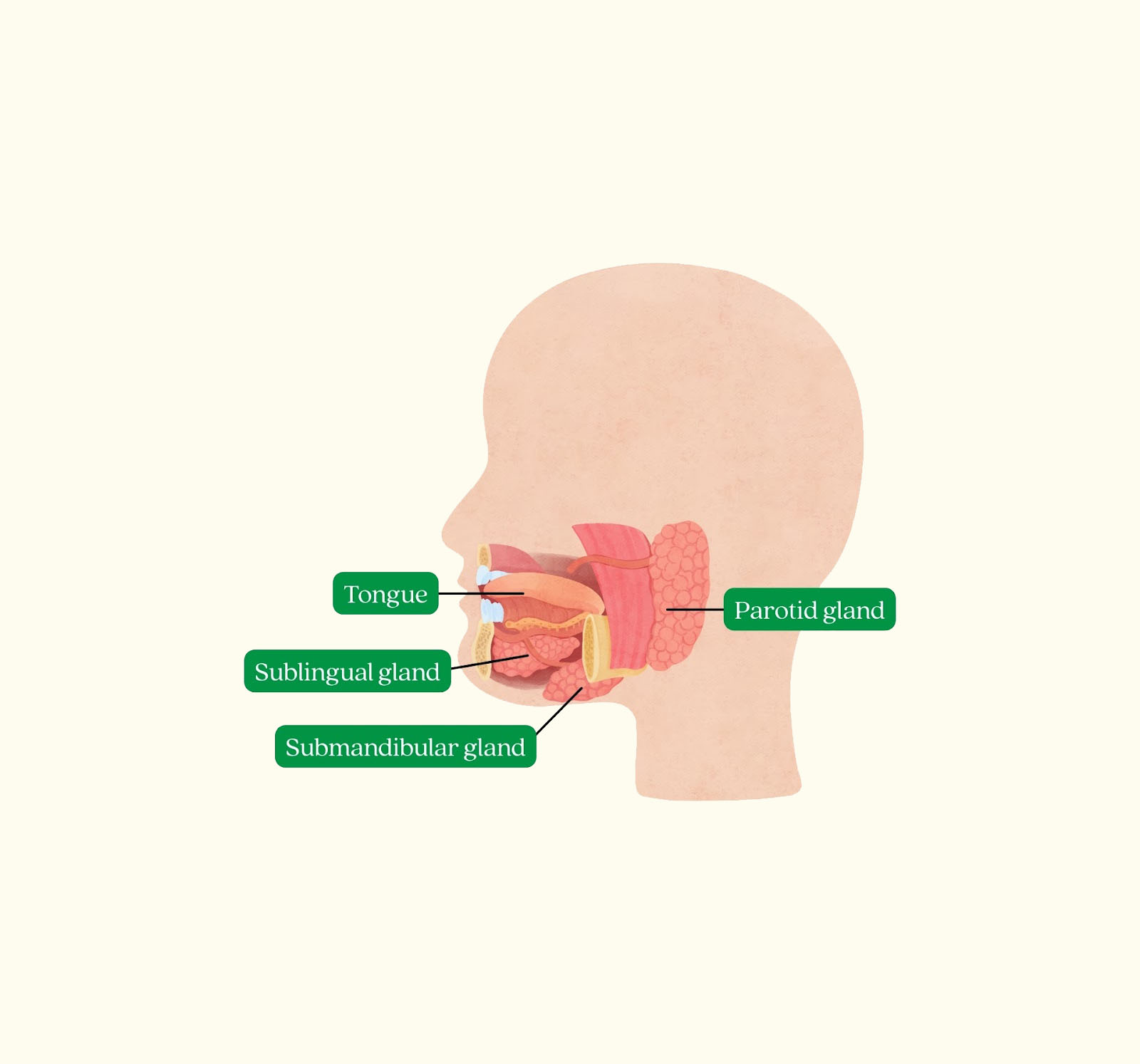
Salivary gland cancer is a cancer that develops in the salivary glands, which produce saliva to support chewing, swallowing, and oral health. The salivary glands include the major glands (parotid, submandibular, and sublingual) as well as the minor salivary glands, which are small glands located throughout the mouth and upper aerodigestive tract.
Most salivary gland lumps are tumours, and importantly, many salivary gland tumours are benign (non-cancerous). The parotid gland, located in front of the ear, is the most common site where salivary gland tumours arise.
When a tumour is malignant, it is referred to as salivary gland cancer. Salivary gland cancers are biologically diverse and can include several tumour subtypes. One of the more common malignant subtypes is mucoepidermoid carcinoma, which often arises in the parotid gland.
Because these tumours can vary significantly in behaviour, an accurate diagnosis depends on tissue sampling and pathology review, which helps determine the tumour type and guides treatment planning.

Salivary gland cancer is rare in Singapore, with an estimated incidence of about 1 case per 100,000 people per year. This reflects the uncommon nature of the disease locally.
Although salivary gland cancer is uncommon, any persistent lump or swelling near the jaw, cheek, ear, or inside the mouth should be medically evaluated, especially if the lump enlarges over time or is associated with symptoms such as pain, numbness, or facial weakness.
Symptoms of salivary gland cancer vary depending on the location and size of the tumour. In many cases, the earliest sign is a painless lump in the salivary gland region.
Patients with salivary gland tumours most commonly present with a painless, slowly enlarging lump, particularly near the parotid gland in front of the ear.
This may occur when a tumour affects the facial nerve, which passes through the parotid gland.
These symptoms may develop if the tumour grows and affects nearby structures.

The diagnosis of salivary gland cancer involves a combination of clinical evaluation, imaging studies, and tissue sampling. A definitive diagnosis requires pathological examination of tumour tissue.
Care for patients with salivary gland cancer often involves a multidisciplinary team that may include medical oncologists, head and neck surgeons, and supportive and palliative care specialists.
The doctor will assess symptoms and examine the salivary glands and surrounding structures. This may include evaluation of:
A physical examination is performed to assess the salivary glands, oral cavity, and lymph nodes in the neck.
Imaging tests help determine the size and extent of the tumour and its relationship to nearby structures.
Common imaging studies may include:
Ultrasound is often used as an initial imaging test for parotid or submandibular gland lumps, while CT or MRI provides more detailed assessment of tumour extent.
A tissue sample is required to confirm the diagnosis.
The most commonly used method is fine needle aspiration (FNA), where a thin needle is used to collect cells from the lump for microscopic examination.
In some cases, a core needle biopsy may be performed to obtain a larger tissue sample. The pathologist will determine:
This information helps guide treatment planning.
If cancer is confirmed, additional imaging such as PET-CT scans may be performed in selected cases to evaluate possible spread to lymph nodes or distant organs.
Surgery is the main treatment for many salivary gland cancers and aims to remove the tumour completely.
Depending on tumour location and extent, surgery may involve:
Surgeons aim to preserve the facial nerve when possible, although reconstruction may be required if the tumour involves the nerve.
Radiotherapy may be recommended:
Radiotherapy helps reduce the risk of cancer recurrence.
Systemic treatment may be considered in selected situations such as:
This may include chemotherapy or targeted therapy, depending on tumour characteristics and prior treatment.
Supportive care plays an important role in salivary gland cancer management and may include:
Early supportive care involvement can help improve quality of life during treatment.
Treatment of salivary gland cancer is individualised and usually planned through a multidisciplinary discussion. Management depends on:
Salivary gland cancer treatment often involves a combination of surgery, radiotherapy, and systemic therapy depending on the clinical situation.
Di OncoCare Singapura, pasukan pelbagai disiplin kami terdiri daripada pakar onkologi perubatan, pakar bedah ENT dan kepala & leher, pakar onkologi radiasi, pakar radiologi dan pakar patologi. Pesakit juga disokong oleh jururawat onkologi, pakar diet, ahli terapi pertuturan dan penelanan serta kaunselor psiko-onkologi. Mereka bersama-sama mereka bentuk pelan rawatan peribadi yang disesuaikan dengan keperluan setiap pesakit.